authored by NALT Biogeographer, Will Gandy
One of the nice things about living in Asheville is the number of amenities that one has access to. There’s great food, lots of live music, hiking, culture, all kinds of people, you name it. But it also has access to some incredible mountains.
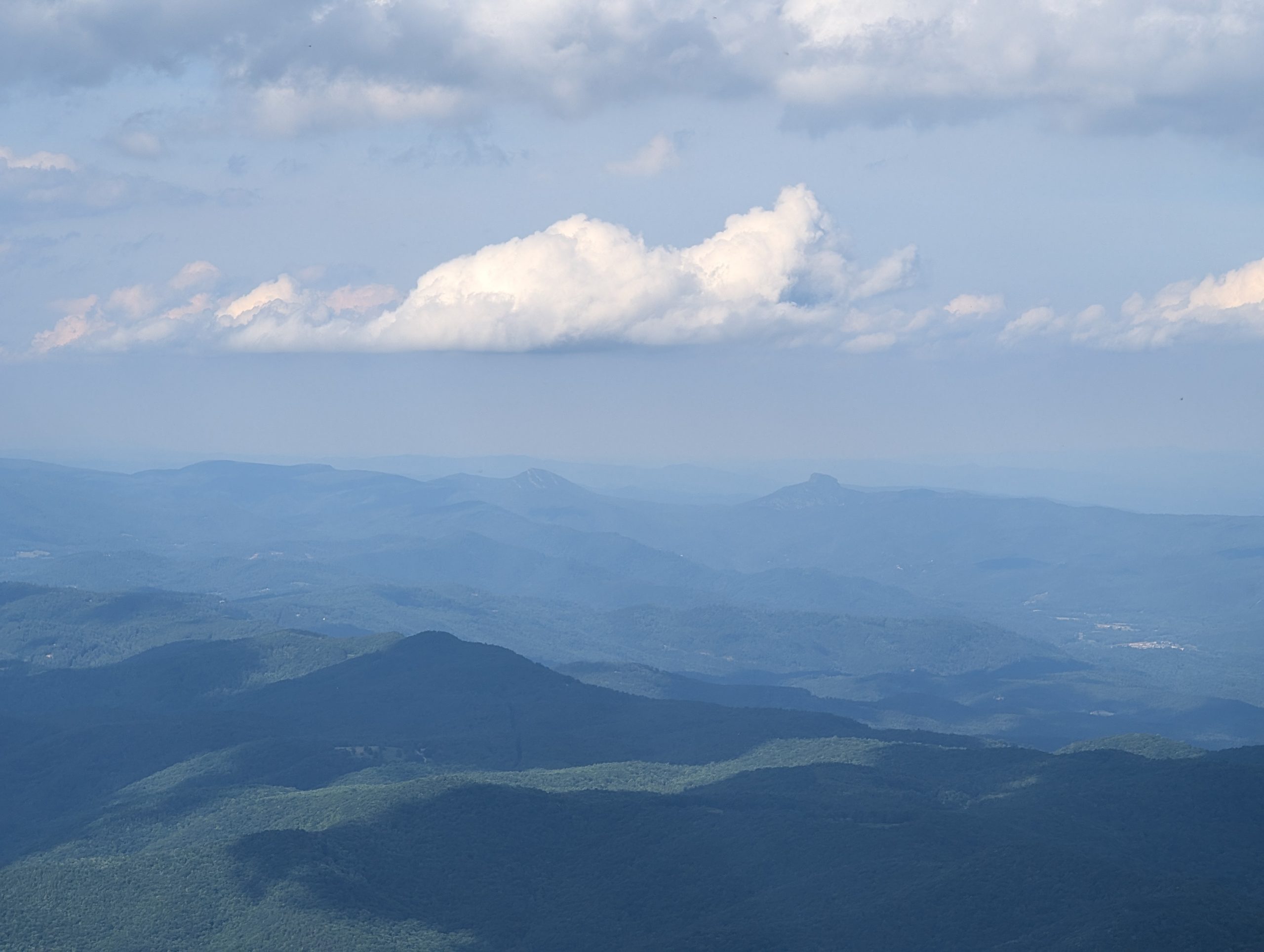
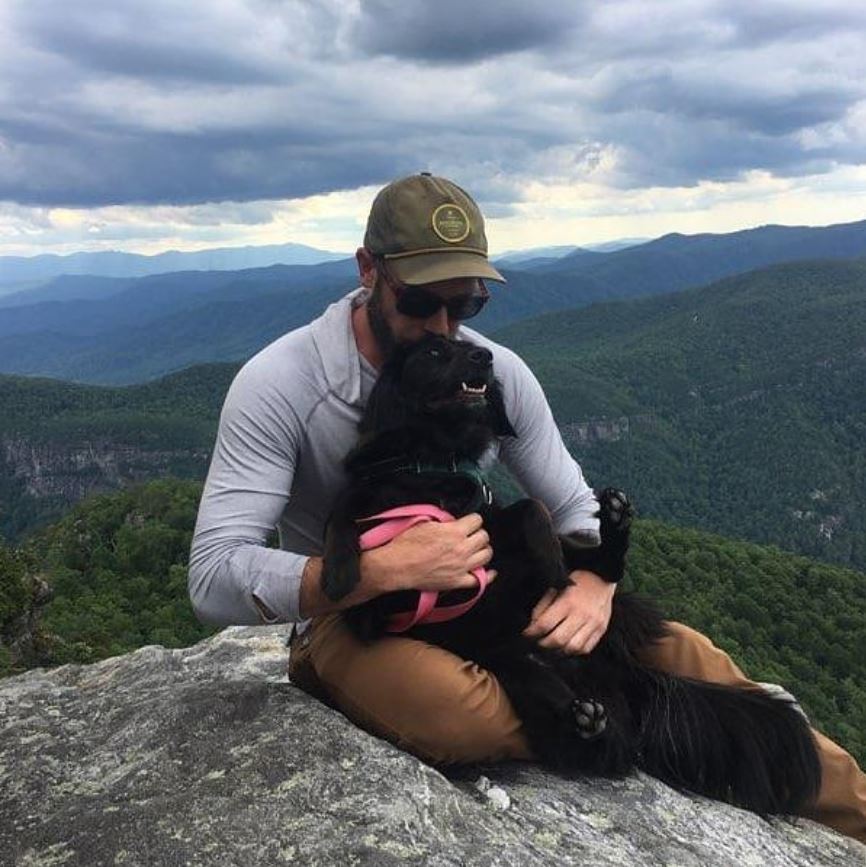
Asheville sits in an inter-montane basin. It is just inside the Eastern Continental Divide, with the French Broad River serving as an artery through the city, helping to make it a relatively flat area on the interior of the mountain chain itself. But, surrounding the city, is the nucleus of the Blue Ridge Mountains. The physiography of the Blue Ridge Mountains as a whole is at its greatest expanse in this region. Rocks from the first known mountain building event are exposed here in places and are still held at over 3000 feet above sea level. The northern terminus of the Blue Ridge Mountains narrows to a single ridge in northern Virginia, totally only 3 miles wide from valley floor to valley floor. A transect running perpendicular to the Mountains around Asheville measures over 75 miles. The first time I hiked up to Craggy Pinnacle with Betty I was in awe of the vast expanse of mountains. I grew up a narrow portion of the Blue Ridge outside of Boone, N.C., but just a 30-minute drive from my house in east Asheville there was an aggregate of mountains that would consume every piece of my vision in all directions. How fabulous was that?
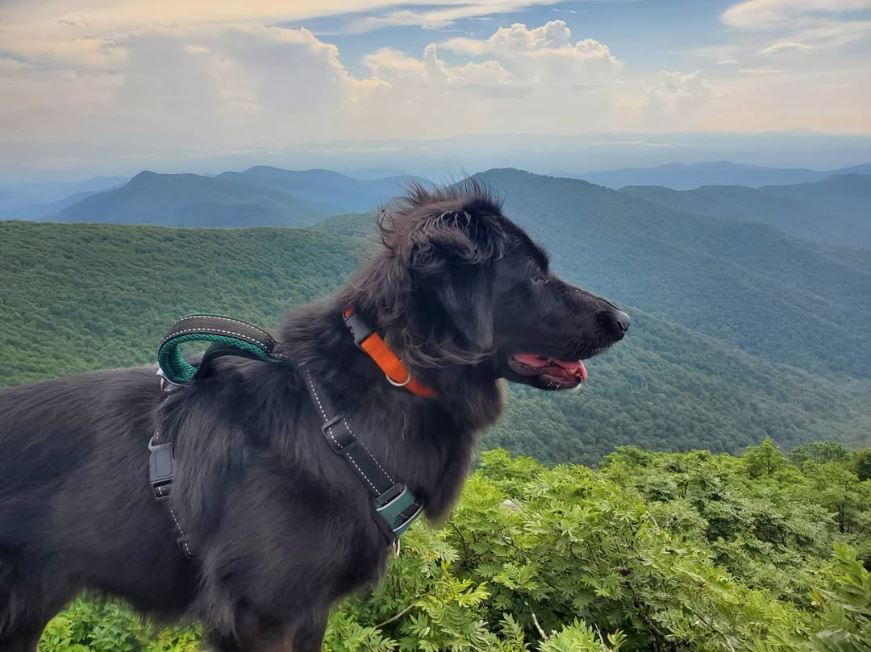
But beyond the Craggy Mountains lies Mount Mitchell or Attakulla in Cherokee; the highest peak in North America (my vote is for Attakulla if you care to know). The summit sits 1.25 miles above sea level and is the crown jewel of the Black Mountain sub range. I’ve visited many times over the years to take in the views, camp, conduct stem counts and to generally botanize. It is a pleasure every time I hike through the forests there. But when the opportunity to join a field trip with the North Carolina State Terrestrial Biologist came along, I immediately seized it.
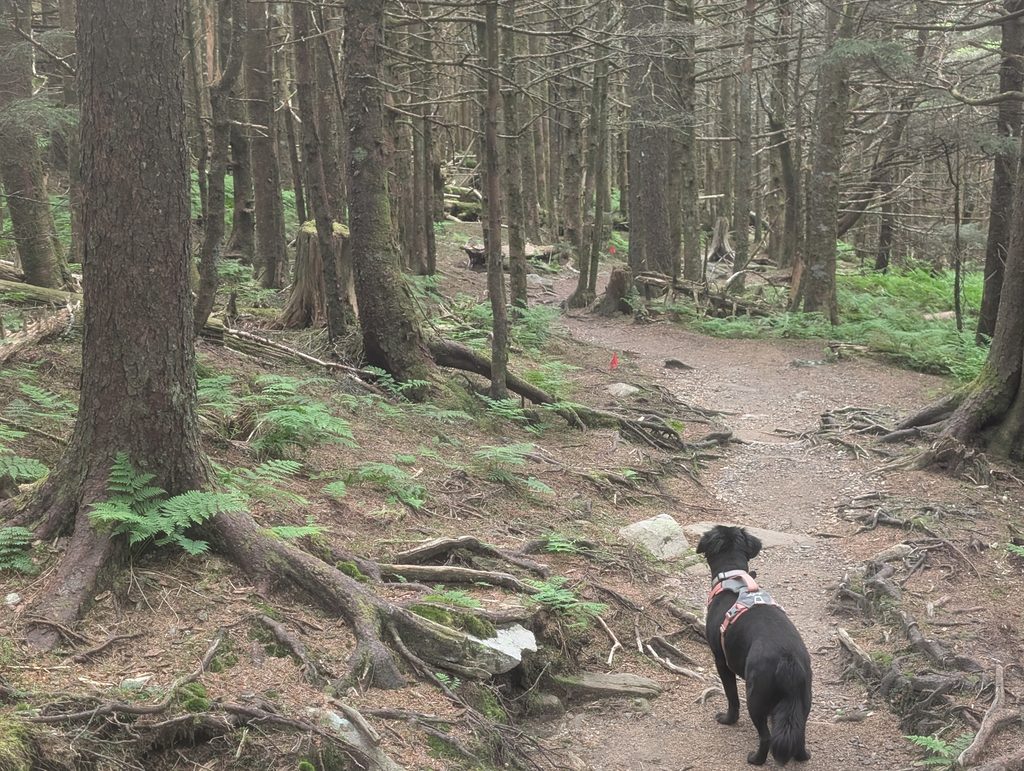
The Natural Areas Association or NAA held their annual meeting here in Asheville this year and there was a full day of field trip programming built into the schedule. So, when Wednesday morning came around, I drove over to the meet-up spot and took a window seat on the bus. What a great trip up the Blue Ridge Parkway I had! For once I wasn’t driving and I could look out of the huge windows that must have been six feet higher than my personal transportation. The fog in the Asheville basin started to break up as we began to increase in elevation. We started at around two thousand feet just above the banks of the French Broad in West Asheville. Within an hour we gained over four-thousand-six-hundred feet of elevation in only 20 air miles. It was in the low fifties when started and the passage of time afforded some heat from the sun, but every thousand feet of elevation generally lowers the temperature around five degrees; It was cold up top. Everyone put on their hard weather gear, and we began to hike around the nature trail.
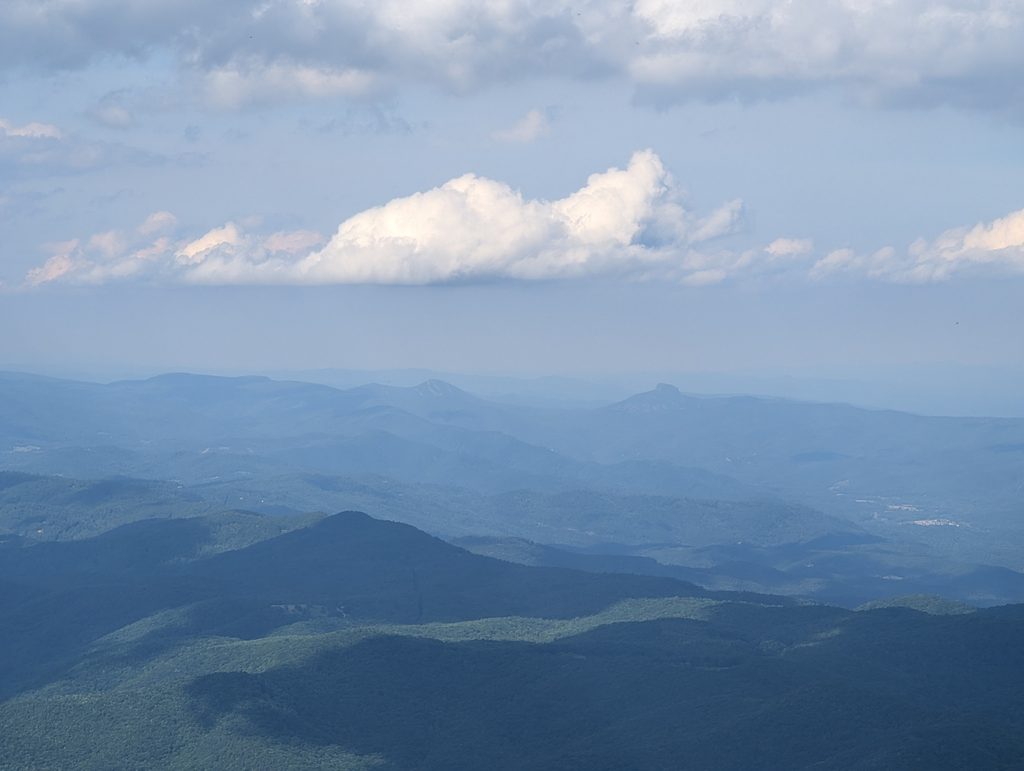
I make it a point to generally to intermediately be familiar with plants and the forest types in the southeast, especially the Appalachians. My travels with the North American Land Trust over the last fourteen years have made that compulsory in a way. That being said, the two personnel from the North Carolina Natural Heritage Program (NCNHP) that were leading the ecological hike are some of the best in their field. I knew that there were things to learn and that’s why I signed up, so it was time to keep quiet and try to absorb as much as I could. Aside from the general narrative that the Heritage Program folks were knitting, there were group questions posed. Most folks from other regions of the country were unfamiliar with the flora and some folks were just starting their careers and had limited knowledge of the rare forest assemblage; some folks knew rather a lot. The Heritage folks were, for the most part, lobbing soft balls, but I kept mostly kept quiet. Attempting to be the smartest person in the room is kind of a bad look to me. I prefer to act like the dullest person in the room for a laugh; it’s really more fun. At any rate, here are some of the basics:
The Spruce-Fir Forests are rare and iconic, they are what make the Black Mountains black, and they are filled with a fascinating ecology.
“Spruce–Fir Forests are communities of the highest elevations in North Carolina, naturally dominated or co-dominated by Picea rubens (red spruce) or Abies fraseri (Fraser fir) …Spruce–Fir forests occupy almost all landforms (in North Carolina) at the highest elevations. Other than seepage-fed wetlands and rock outcrops, they cover the high peaks…Spruce–Fir Forests are mesic (between wet and dry) to wet due to high rainfall, long periods bathed in fog, low temperatures, and, often, high water-holding capacity in the organic-rich soil. Several high mountain ranges have had measured average annual rainfall of 70-80 inches” (Schafale, 2023).
“(M)ost sites are strongly exposed and convex in shape. Elevation and orographic (mountainous terrain) effects make the climate cool and wet, with heavy moisture input from fog as well as high rainfall. Strong winds, extreme cold, rime ice (hoarfrost), and other extreme weather are periodically important factors in the structure and dynamics of this vegetation. Concentration of air pollutants has been implicated as an important anthropogenic (human caused) stress in recent years. In recent decades, the balsam woolly adelgid (Adelges piceae), an introduced insect, has killed almost all of the mature Fraser Fir (Abies fraseri )” (NatureServe, 2026).
Now, here are some of the new things I learned.
1. The Fraser fir or the she-balsam, dominates the highest elevations (I thought it was always a mix of fir and spruce).
2. The smooth bark of the Fraser fir is home to at least 6 narrow endemic bryophytes.
3. Spruce is called he-balsam because of its large size.
4. Eastern red elderberry (Sambucus racemosa) is the high elevation species first cousin to common elderberry (Sambucus canadensis).
5. In addition to the high rainfall, up to 70 inches of additional water may be captured in the needles and transmitted via stemflow to the forest floor.
6. Spruce-fir forests likely extended as far south the low country of South Carolina during the last glacial maximum.
7. Ground beetles found in these sky islands are usually endemic to individual sky islands.
8. Red spruce lives to a maximum of around 400 years, Fraser fir can live to around 70 years.
9. Restoration seed is sourced from individual sky islands due to isolation and species trending towards more individualistic genotypes.
One week later, I was on top of Toxaway Mountain at the Southern Highlands Reserve (SHR) and Native Plant Arboretum. North American Land Trust holds Conservation Easements on its campus and many other areas in the region. On-site they host the public for educational tours and conduct red spruce restoration initiatives across southern Appalachia. You should really check this place out.
I was viewing the mountains to the northeast at around 4,700 feet and trying to find where I was just a week ago with my new friends and colleagues that care about this natural world so much. I was able to find it fairly easily with the help of the orientation plaque that was at the vista point. Half an hour later, our President, Steve Carter, and our Engagement Director, Patty Kennedy, along with the founder and then Executive Director of SHR, Robert Ballentine and Kelly Holdbrooks (respectively) were catching up on all things SHR, conservation big and small, mountain bogs, our families and friends, and the NAA Conference.
As time goes on, I begin to doubt myself less than I used to. I find myself speaking and collaborating with folks that have been spending as much or more time than I, thinking and toiling in the work of environmental science and conservation. 20 years ago, while I was matriculating into the master’s program in Geography at Appalachian State University, I could only dream of finding a job, and I to dream harder to fancy finding one that helped to curb the perforation and destruction of the Appalachian landscape that had enveloped me my whole life; that I had come to cherish so much. But here I find myself, right now. Most of my dreams are all in Appalachia, they all are in the forests and on the outcrops and in the streams and I’m almost always in a blissful solitude not really knowing how I’ve come to be there.
It feels like the “sabi” that Alan Watts describes as the “the wonderful, lonely place” (Watts, 2025a). And when I find myself there outside of the dream state, imposter syndrome is a thing that can creep in at times for me. There are so many folks that are so much more intelligent and focused than I working in this field. But maybe, I’m actually living in that dream state. After all, we could dream out and experience all of our fantasies at some point you would hit the surprise button and “you would dream the dream of living the life that you are actually living today”; and I am (Watts, 2025b). And these years of seeking and yearning for the next accomplishment and for the next unknown experience, “at the end of the line… (it may be likely that I’m) confronted with a mirror” (Watts 2025a).
authored by NALT Biogeographer, Will Gandy
References:
Watts, A.. 2025a. Zen and the Arts – Uncarved Block. Eastern Wisdom Collection: Remastered. Alan Watts Electronic University. Available at http://www.alanwatts.org (Accessed 10/15/2026).
Watts, A.. 2025b. Philosophy and Society – Nature of Consciousness. The Essentials Collection: Remastered. Alan Watts Electronic University. Available at http://www.alanwatts.org (Accessed 10/15/2026)
NatureServe. 2026. NatureServe Network Biodiversity Location Data accessed through NatureServe Explorer [web application]. NatureServe. Arlington, Virginia. Available at http://www.natureserve.org/. (Accessed 10/15/2026).
Schafale, M. P. 2023. Classification of the natural communities of North Carolina: Fourth approximation. North Carolina Department of Natural Resources, Natural Heritage Program. Raleigh, North Carolina. Available https://www.ncnhp.org/classification-natural-communities-north-carolina-4th-approximation. (Accessed October 15, 2026)