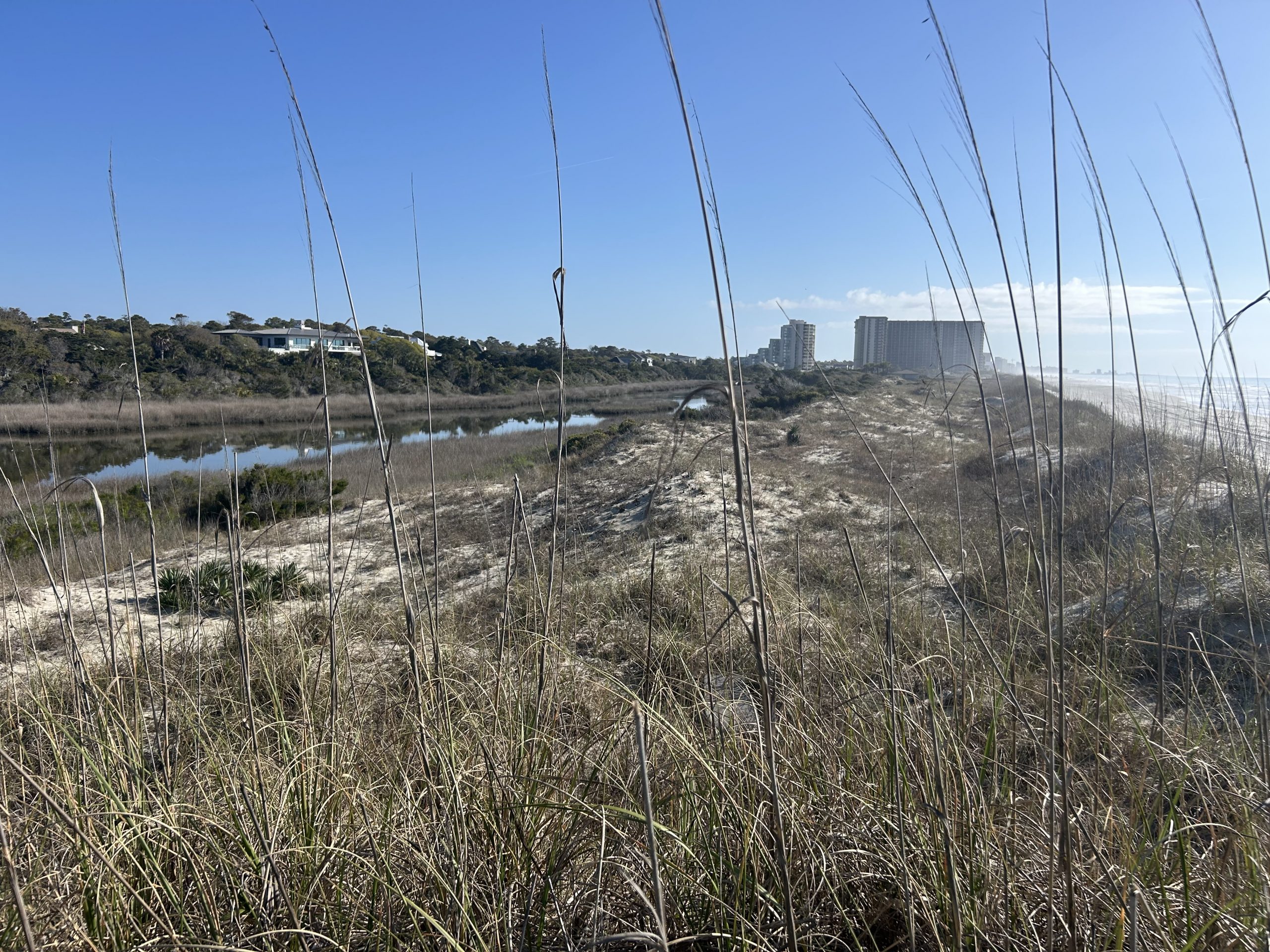
Myrtle Beach is a beloved coastal destination, drawing families from across the country for its high energy beach offerings. The “Grand Strand” is defined by high-rise hotels, condominiums, beachfront estates, putt-putt courses, souvenir shops, and the full spectrum of vacation tourism infrastructure. From an aerial perspective, the coastline reflects decades of steady development, with little remaining evidence of its original natural landscape.
Yet, one exception remains.
In North Myrtle Beach, 1.7 miles of undeveloped land persists as a rare and intact piece of coastal wilderness. Portions of this landscape are owned by a spiritual retreat center, with over 0.5 mile of beachfront permanently protected in 2004 by the North American Land Trust (NALT) in partnership with the Coppage family and the surrounding Briarcliff Acres community.
The decision was made to forgo development, recognizing the ecological value of the property and its importance within an otherwise heavily built environment. The resulting conservation easement safeguards a diverse and highly functional coastal system, including natural sand dunes, tidal creeks, tidal pools, and an intact maritime forest edge of wildlife and ecological processes.
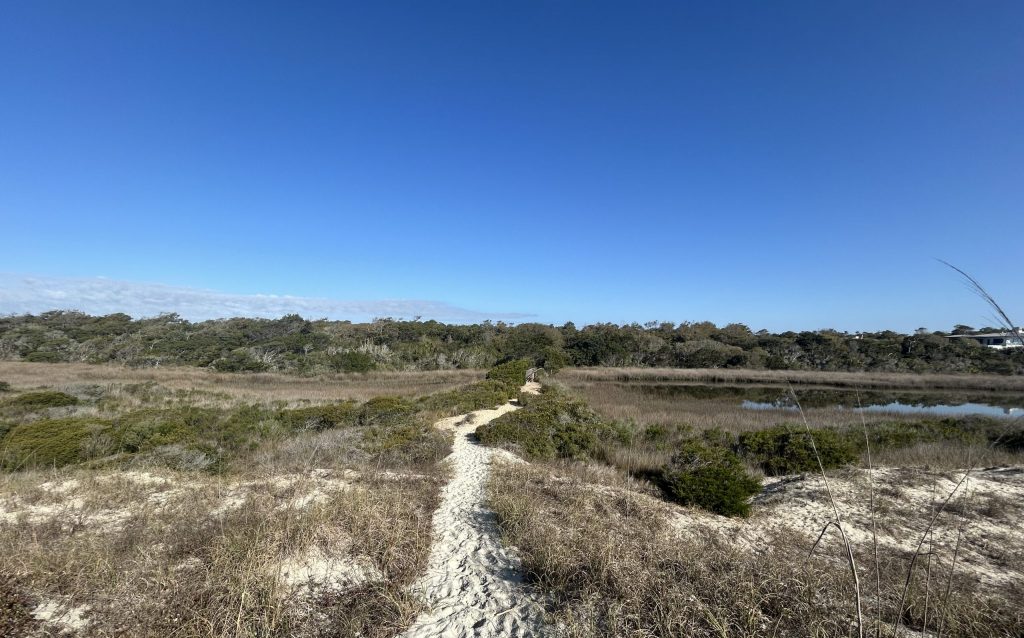
Tidal pools, rich with oysters, play a vital role in filtering and improving water quality—often audibly marked by the subtle popping sounds of active shells. Wading birds frequent the area, alongside species such as cormorants and wood storks, which rely on the mix of freshwater, brackish ponds, and tidal creeks for feeding and nesting. The maritime forest serves as a critical transition zone, offering shelter and connectivity for both wildlife and people moving through the coastal landscape. And the dunes offer a valuable nesting site for Loggerhead Sea Turtles.
Surrounded by intense development, this preserved tract demonstrates how even a relatively small conservation effort can yield outsized ecological benefits. It provides refuge, enhances biodiversity, and maintains natural coastal functions that are increasingly rare along the Grand Strand.
NALT currently protects more than 18,000 acres across South Carolina, from the coastal plain to the mountains. This project stands as a compelling example of how strategic conservation, community collaboration, and landowner leadership can preserve meaningful natural spaces—even in the most developed regions.
authored by Patty Kennedy
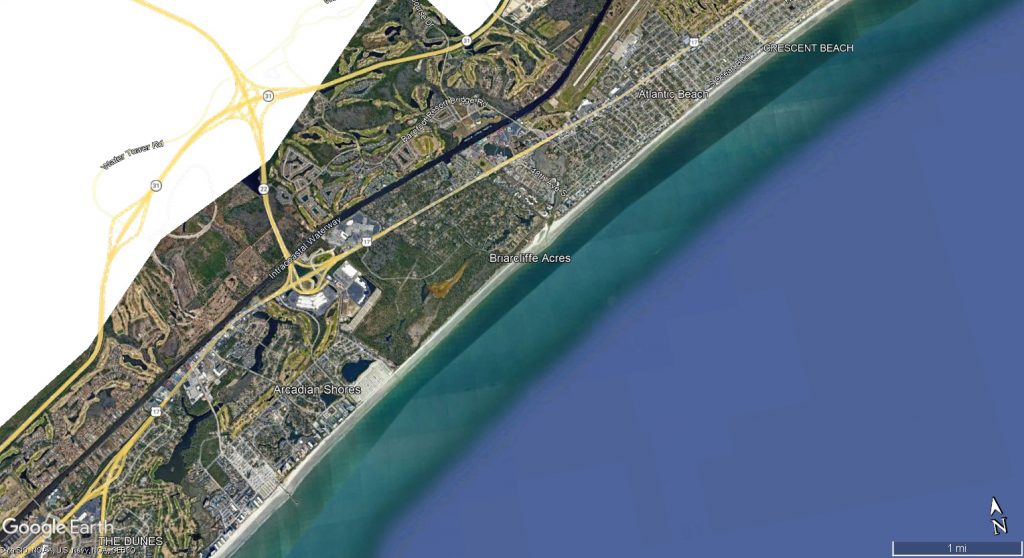
The open space of Briarcliffe Acres along the South Carolina Coastline