I recently moved my work-from-home office to my sunroom, my favorite room in our “new to us” 1964 ranch house. It looks out through big picture windows to a sun-drenched, cozy, and wildlife-filled backyard. Two bird feeding stations off the back deck bring in a variety of resident birds like Cardinals, Chickadees, and even Bluebirds, so I thought of putting my seat next to the window as a way to get through the dreary winter months, birdwatching in breaks from looking at my computer screen.
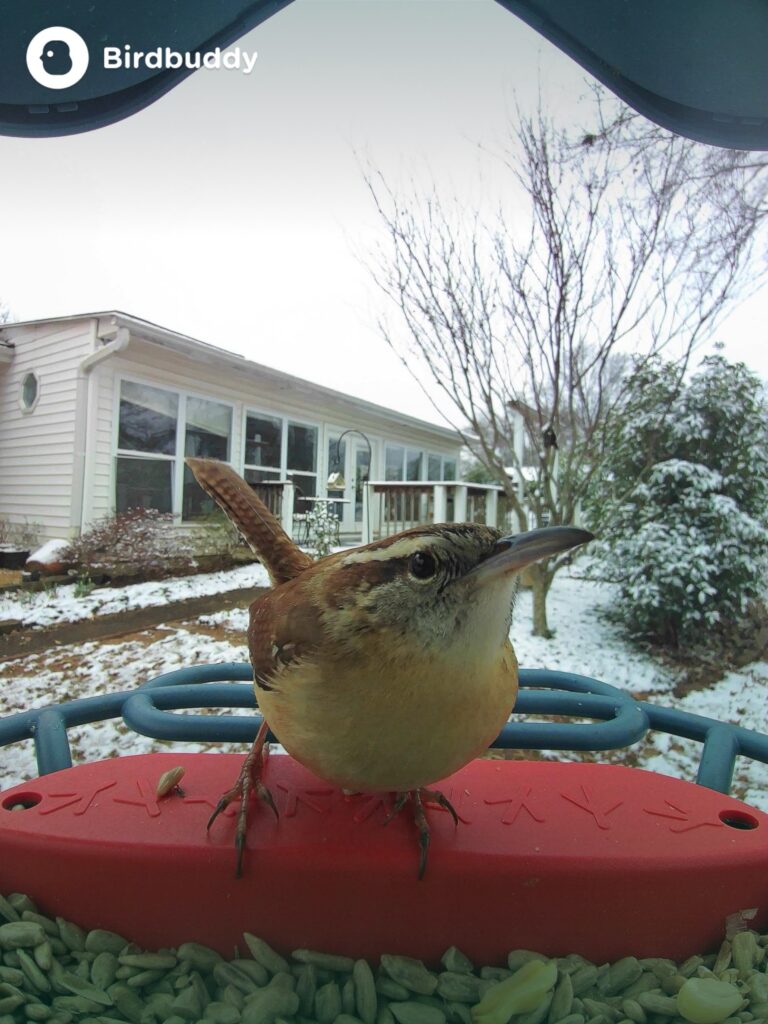
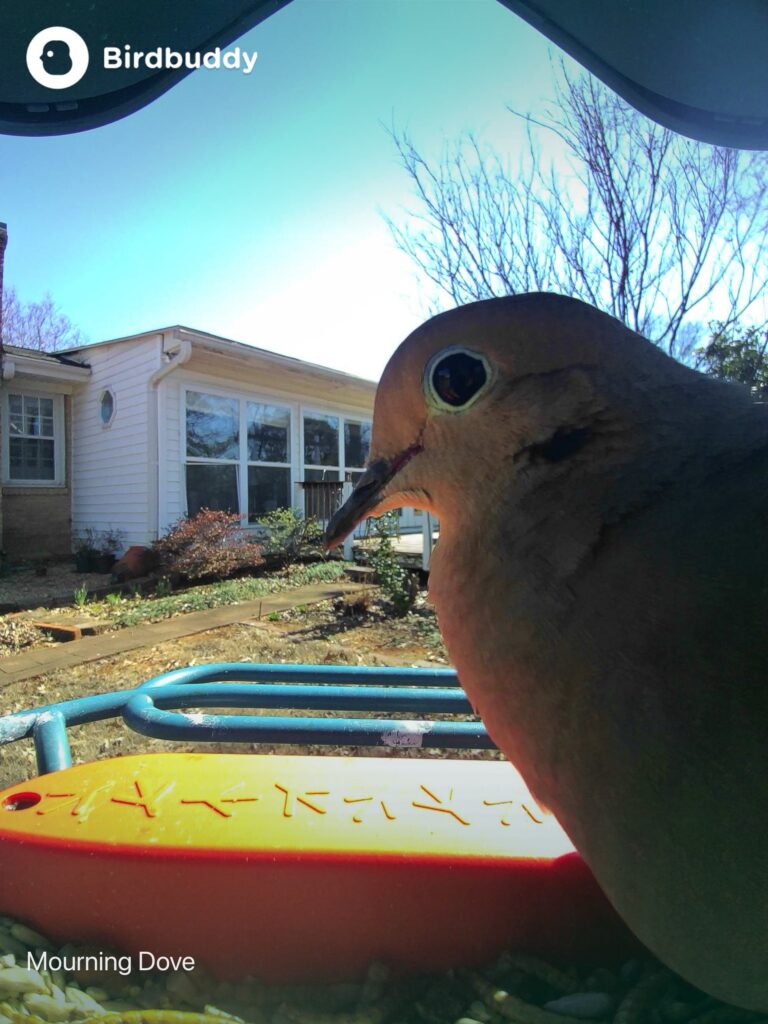
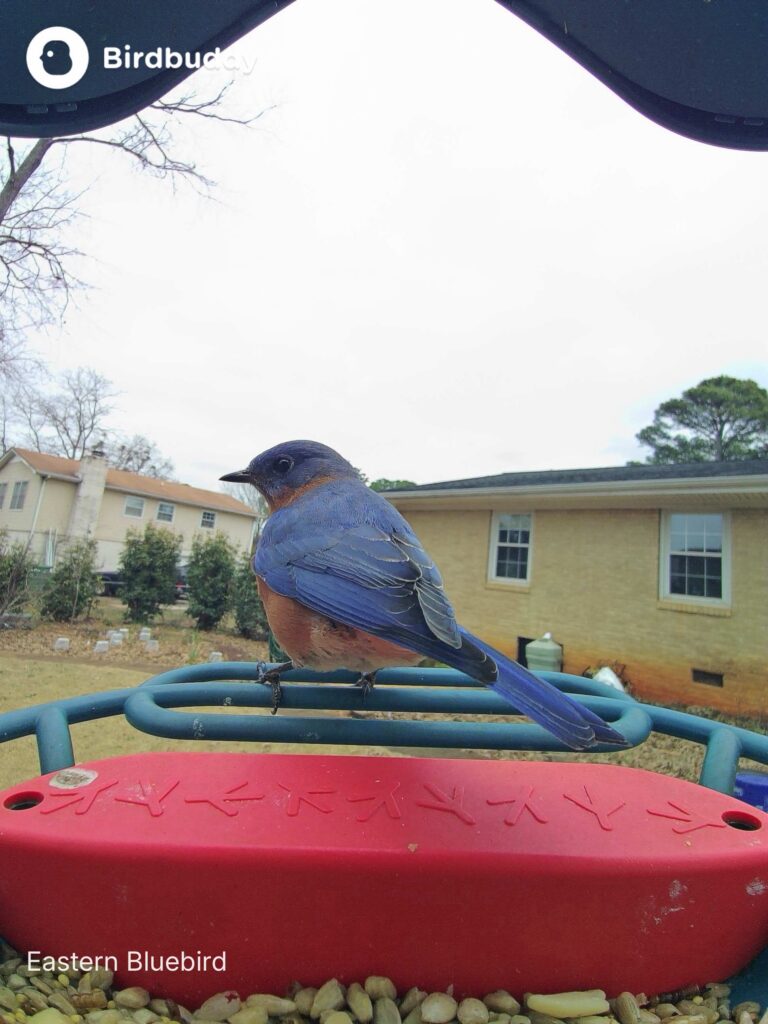
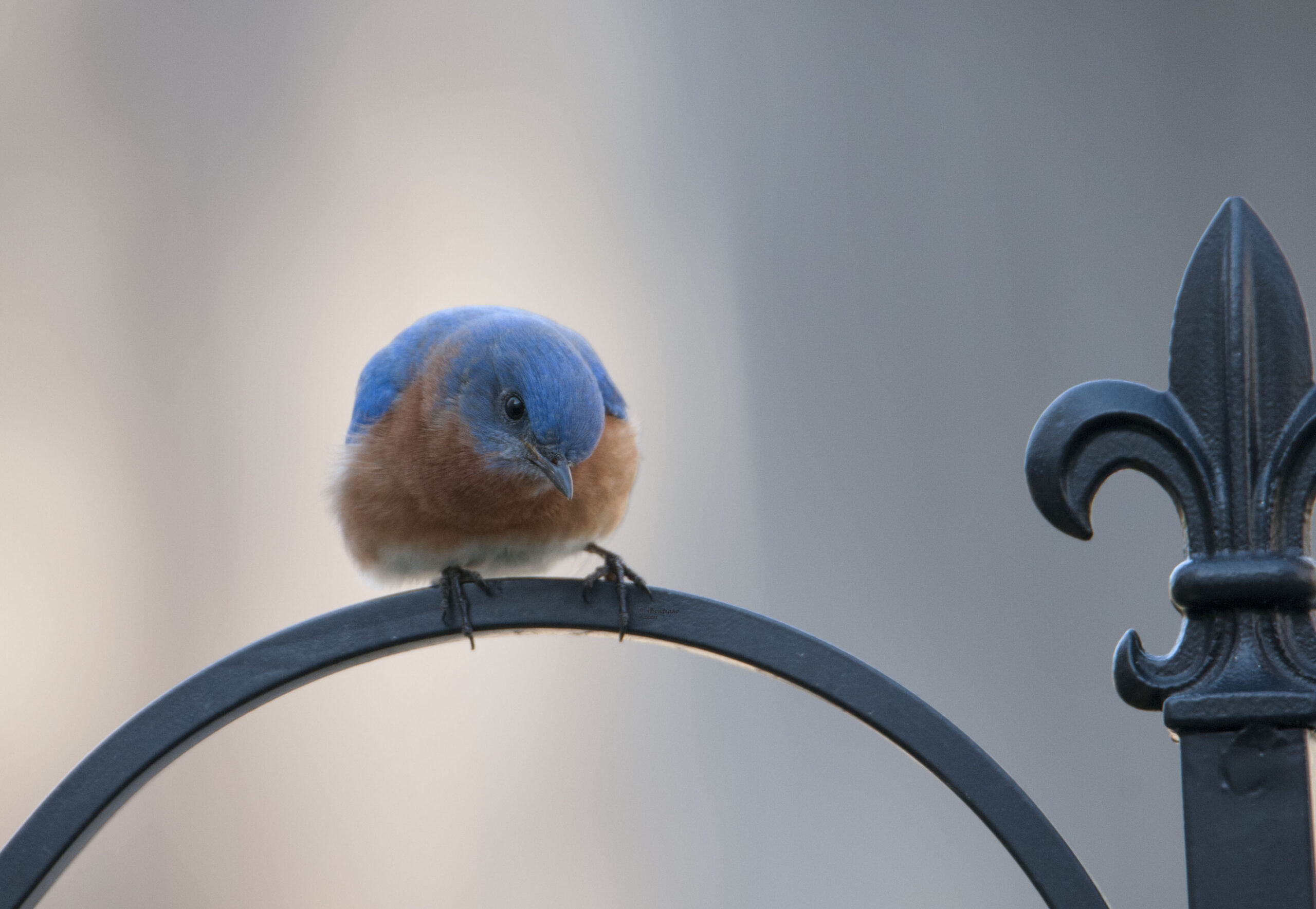
Glamour shots from my Birdbuddy feeder cam
Like most days, I was sitting enjoying my morning cup of coffee, typing away, and — “THUD.” I look to my left with a start, and notice feathers on the window. A closer look revealed a small brown-headed cowbird panting heavily and looking confused on my patio chair. I looked out the window to see that a Cooper’s Hawk had flown into the yard to take advantage of the birdfeeder, their very own birdfeeder! I go outside, gently pick the bird up, and place it in a paper bag to keep it warm and protected until the stun of the window strike wears off. This happened a number of times, first the cowbird, then a mourning dove, then a chipping sparrow. The occasional thud was so disheartening to me, I decided to move my office back into the main house, but also, realized I had to do something to help prevent birds from hitting my window.
Unfortunately, I am no stranger to bird window collisions. Through my involvement with my states Audubon society, I have learned about and participated in Project Safe Flight, a community science monitoring project aimed to collect bird-collision data across cities and campuses across the state’s major cities. The routes are designed to track dead or stunned birds outside of buildings that have a high likelihood of causing collisions, typically buildings with large reflective glass panes.
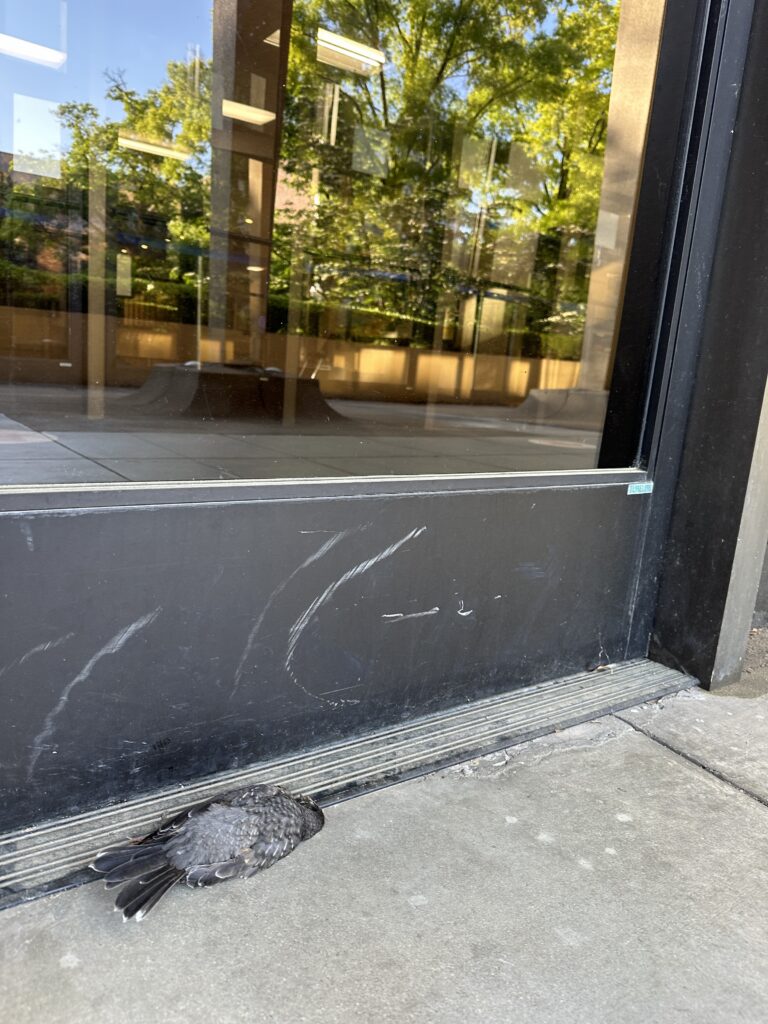
A juvenile robin found dead from a window collision during a bird monitoring route
It is estimated that up to one billion birds die each year from collisions with glass panes in North America alone. These deaths are preventable in the home and commercial realm, however, including bird-safe glass in construction has not become common place, and retroactively adding bird-safe window treatments can be costly, particularly for large buildings. Particularly during migratory seasons, birds fly in mass numbers, stopping throughout their route in both natural, and built environments, for shelter, food, and rest along their journey. No matter the environment they find themselves in, these areas are often intermixed with the human environment, full of pitfalls like outdoor cats, vehicles, powerlines and turbines, and large buildings with reflective windows. These reflections make the window space look like the outdoors, forested and planted, where they can fly to seek shelter. Adding bird-friendly window treatments can help prevent this from happening.
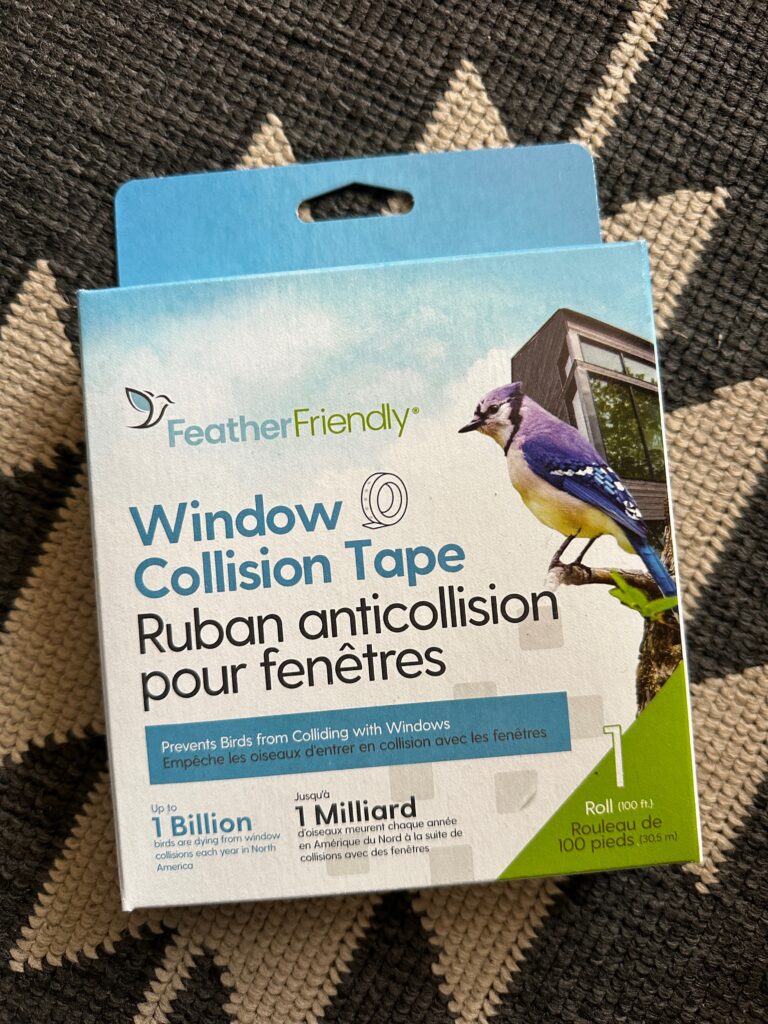
Bird-friendly window tape to apply to your windows
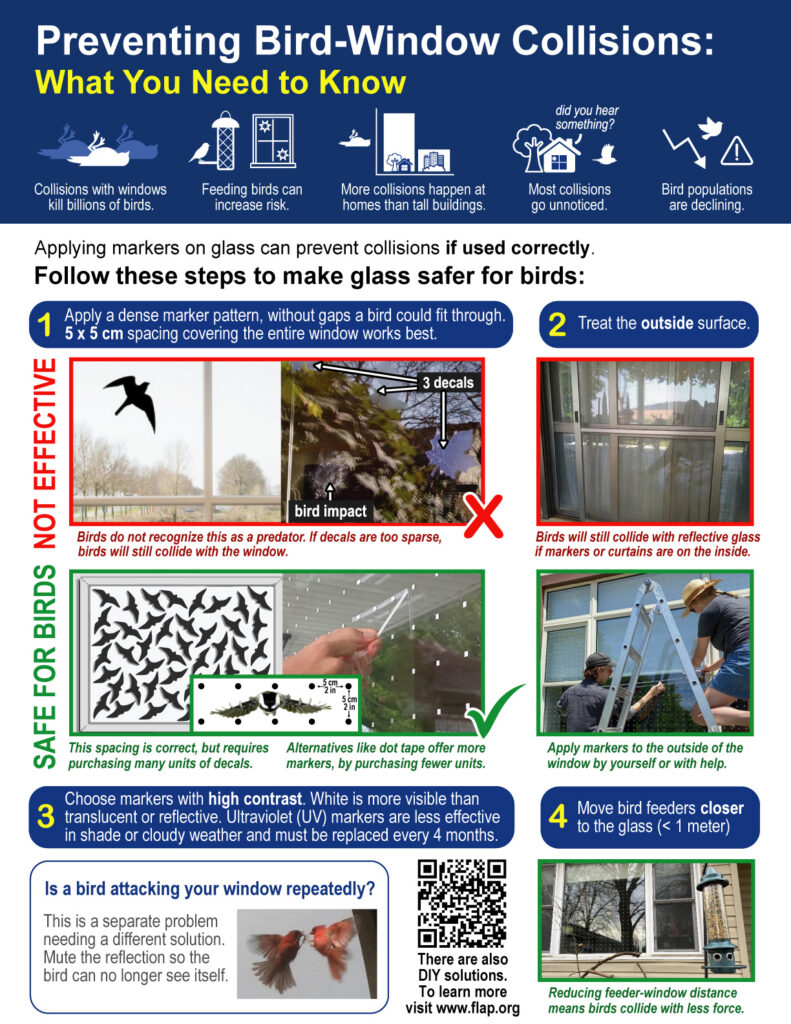
To try to figure out the best and most affordable process for my home windows, I did some research through various online resources, including the National Audubon Society and Cornell Lab of Ornithology. There are many types of decals, including decorative and dot decals, but the most important feature about placement is that they are spaced no more than 2 inches apart. This helps the bird differentiate and estimate the space they could fly through. Also, the material should be UV-reflective, so that it is high-visibility for the birds. Because I wanted to be able to see through my windows as much as possible, I chose the Feather Friendly window decals, which are good for small residential projects like mine. There are many options depending on the size of your project and the aesthetic choice you are looking for.
There are many examples, including this high-profile article recently referencing a deadly building in Chicago. Collision surveys showed a 95% decrease in collisions with appropriate window treatment, saving the lives of thousands of birds that fly through the Midwest migratory flyway. A great resource for Chadds Ford residents is Bird Safe Philly, a local organization with several resources for safeguarding birds in urban environments including information about Bird Collisions. Lastly, if you want more information about migratory birds, and how to improve your home and habitat to be more bird and wildlife friendly, don’t hesitate to reach out to us at North American Land Trust (www.northamericanlandtrust.org) to discuss with one of our biologists.